The Complete Guide to HPDE Websites, Coaching Channels & Onboard Lap Study to Drive Faster
How grassroots track day drivers use dedicated motorsport portals, YouTube coaching channels, 2-Up MultiView film study, and telemetry synchronization to shave seconds off their lap times.
Home Circuit: Road America / Blackhawk Farms Raceway · Chassis: Ford Mustang Shelby GT500 / Dark Horse
Sharing a Raw YouTube Link vs. Promoting Your HPDE.tv Channel
| Platform / System | Primary Role & Function | Video & Telemetry Integration | Driver Pace Benefit |
|---|---|---|---|
| HPDE.tv (CH 101 to CH 1973) | Grassroots Motorsport OTT, Video Vault & Linear Broadcast | 7,496+ verified stints, 2-Up MultiView, 4-Cam TrackZone, FAST linear channels | |
| HPDE.app | Universal Driver Passport & Circuit Directory | Digital run-group logbook, transponder verification, and track guides | |
| DriveHPDE.com | Driver Event Booking & Telemetry Log Vault | Direct integration with track day registration and cloud telemetry storage | |
| TrackDayOS.com | Track Operator, Corner Marshal & Tower Flag OS | Live paddock flag dispatch (Green, Yellow, Red, Black, Meatball) and run-group staging | |
| MotorsportReg / Club Registration | Event Registration & Tech Sheet Administration | Roster management, instructor pairing forms, and payment processing | |
| YouTube Coaching Channels (Speed Secrets, Driver61, AutoX and Track) | Driving Dynamics & Mental Craft Education | Classroom whiteboard teardowns, weight transfer physics, and vision technique lectures | |
| Hardware Loggers (Catalyst, AiM, RaceCapture, Apex Pro, RaceBox) | In-Cockpit Data Acquisition & Lap Timing | GPS delta, CAN-bus engine sensors, SmartyCam overlays, and LED friction circle meters |
The Modern Track Day Learning Curve: Escaping the Solo Plateau
Every enthusiast who enters High Performance Driver Education (HPDE) remembers the adrenaline of their first novice weekend. An experienced instructor rides in the passenger seat, tapping the dashboard, calling out braking zones, and keeping you safe as you learn flag stations and track etiquette. Within three or four weekends, most drivers achieve solo sign-off and earn their intermediate run-group credentials.
That is usually when drivers hit the solo plateau. Without an instructor in the right seat calling out mistakes, lap times flatten. Drivers try to compensate by braking harder, turning in earlier, or buying sticky 200tw tires and aggressive coilover suspensions. Yet the stopwatch barely moves, and tire wear accelerates dramatically.
Breaking through this barrier requires a modern digital playbook. The fastest amateur drivers do not guess on track. They arrive on Friday evening having already studied sector reference lines, identified visual brake markers, and analyzed telemetry deltas using dedicated motorsport platforms and targeted YouTube coaching channels.
Every 30 minutes of high-intensity cockpit film study before a track weekend yields more measurable pace gains than an expensive bolt-on suspension upgrade.
Top HPDE Websites to Improve Your Driving: The Ecosystem Breakdown
Improving your driving craft starts with understanding the digital tools available across the amateur motorsport landscape. Rather than relying on scattered forum threads and disconnected social media groups, drivers today navigate an integrated six-site ecosystem alongside established registration portals and sanctioning bodies.
HPDE.tv serves as the premier top-of-funnel video aggregation and broadcast network. With 7,496+ verified onboard stints across 1,735 locked channels (CH 101 to CH 1973), HPDE.tv indexes pure track sessions by circuit, chassis, and telemetry overlay. Drivers use its 2-Up MultiView theatre to lock two laps side by side at the start/finish line, scrubbing simultaneously to compare turn-in commitment and throttle application. Built-in FAST channels (CH-01 // ONBOARDS, CH-02 // CRAFT, CH-03 // PADDOCK, and CH-04 // PRO WIRE) stream continuous track action 24/7.
HPDE.app provides the Universal Driver Passport and national circuit directory. It acts as an immutable digital logbook that records verified track days, run-group sign-offs, transponder timing records, and medical safety info across sanctioning bodies, ending the paper logbook shuffle when visiting new tracks.
DriveHPDE.com streamlines driver event booking and telemetry vault management, connecting driver schedules directly with cloud session notes. TrackDayOS.com powers corner marshal tower communications and live flag notifications, while RaceDayOS.com manages club racing transponder timing.
To find and register for events, drivers use MotorsportReg and Club Registration. These registration engines list annual event calendars for premier sanctioning bodies: the National Auto Sport Association (NASA) with its clear HPDE 1 through 4 progression ladder; Hooked On Driving (HOD) known for low run-group density and patient coaching; the Porsche Club of America (PCA) with its rigorous instructor training; BMW CCA; Chin Track Days offering exceptional seat time; SCCA Track Night in America; and Gridlife festival competitions.
Essential HPDE Video & Coaching Channels: Theory vs. Pure Onboards
YouTube contains hundreds of thousands of automotive videos, but fewer than one percent provide actionable driver development value. To drive faster, drivers must distinguish between conceptual driving theory and authentic in-cockpit sector execution.
Conceptual Driving Theory and Mental Craft:
Speed Secrets (Ross Bentley): The gold standard in motorsport mental training. Ross Bentley dissects vision techniques, sensory awareness, the tire grip envelope, and how to calibrate your brain for high-speed decision making.
Driver61 (Scott Mansell): Exceptional physics-based breakdowns of vehicle dynamics. Scott Mansell uses visual telemetry overlays to illustrate trail-braking hydraulic modulation, slip angle management, and why early apexes kill straightaway exit velocity.
AutoX and Track: Focused on real-world car control, budget track car preparation, and how autocross fundamentals translate directly into high-speed road course confidence.
Grassroots Motorsports (CH 1051): The definitive engineering authority for real-world amateur drivers, featuring rigorous 200tw tire shootout tests, brake pad friction comparisons, and aerodynamic testing.
Practical In-Car Sector Study and Track Reference Lines:
ShelbyFlyer (CH 830): An indispensable resource for grassroots road racers. Beyond his celebrated 6-part HPDE Educational Series detailing run-group etiquette and paddock survival, ShelbyFlyer provides masterclass in-car stints at circuits like Road America, Blackhawk Farms, and Ozarks International Raceway, demonstrating how to manage high-horsepower machines with smooth throttle modulation.
PhD Racing Lab / Jackie Ding (CH 103): Super Lap Battle record holder Jackie Ding pairs blistering time attack hot laps with transparent AiM Solo 2 DL telemetry overlays, analyzing apex curb hopping and brake-marker optimization.
DriveTDX (CH 101): Steve F provides deep paddock insight into South Florida track days at Sebring International Raceway and Homestead-Miami Speedway, focusing on safety culture and line discipline.
SelfMade MotorSports (CH 102): Daniel Toro documents BMW chassis setups, suspension alignment specs, and arrives-and-drives for grassroots competitors.
TheTopher (CH 104): Immersive binaural cockpit POV testing of production sports cars, giving drivers an unfiltered look at factory chassis limits on track.
The Power of 1,735 Grassroots Channels (CH 101 to CH 1973): Watching a factory GT3 pro driver on slick tires is entertaining, but it will not teach you where to brake in a 200tw street-tired Mazda Miata, Honda Civic, or BMW M3. HPDE.tv curates 1,735 independent amateur channels so you can benchmark drivers piloting your exact vehicle platform at your home track.
Always benchmark against reference onboards within 200 pounds and 50 horsepower of your vehicle. Comparing a momentum car against a high-horsepower supercar leads to incorrect braking markers and dangerous apex speeds.
Regional Circuit Film Study: Upper Midwest to Sunbelt Cathedrals
Effective film study must adapt to the specific physical architecture of each circuit. Drivers preparing for a weekend should examine both local technical proving grounds and national championship road courses.
Upper Midwest and Northern Circuits:
Brainerd International Raceway (BIR): Located in Minnesota lake country, Brainerd features the iconic Donnybrooke 3.1-mile road course with the fastest Turn 1 in North American road racing: a sweeping 60-foot-wide right-hander taken at 150+ to 170+ MPH flat out before braking for Turn 2. Film study is essential here to build visual comfort with speed compression and to master the tight, technical infield of the 2.5-mile Competition Course.
Dakota County Technical College (DCTC) Driving Range: Situated in Rosemount, Minnesota, this asphalt training facility is the Upper Midwest proving ground for autocross, car control clinics, and low-speed threshold braking exercises. Studying DCTC onboards helps drivers practice rapid second-gear weight transfer before stepping up to higher-speed road courses.
Road America: The 4.048-mile Elkhart Lake cathedral of speed demands extraordinary brake discipline. Cockpit study focuses on heavy threshold braking from 140+ MPH into Turn 1, the downhill compression into Turn 5, maintaining momentum through the Hurry Downs, committing flat out through the blind kink at Turn 11, and trailing brakes smoothly into Canada Corner.
National Benchmark Road Courses:
Watkins Glen International: Mastering the uphill Climbing Esses and the high-speed curb strikes in the Inner Loop Bus Stop.
Virginia International Raceway (VIR): Balancing the blind uphill transitions of the Climbing Esses against the downhill braking challenge of South Bend and the Oak Tree turn.
Sebring International Raceway: Absorbing the historic concrete slab bumps of Turn 17 and managing high ambient heat during the Sunbelt winter season.
Circuit of the Americas (COTA): Managing the 133-foot vertical climb into the Turn 1 blind crest and rhythm transitions through Sector 1.
WeatherTech Raceway Laguna Seca: Calibrating sightlines for the blind downhill plunge through the Corkscrew.
Integrating Hardware Telemetry with MultiView Study:
Viewing onboards in isolation only tells half the story. The fastest drivers pair HPDE.tv 2-Up MultiView playback with hardware telemetry rigs: the Garmin Catalyst for audio coaching cues and optimal sector synthesis; the AiM Solo 2 DL for CAN-bus steering angle, brake pressure, and throttle traces; AutoSport Labs Podium / RaceCapture for live telemetry streaming; Apex Pro for real-time LED friction circle utilization; and RaceBox for high-precision 25 Hz GPS timing.
How to Get Your YouTube Channel on HPDE.tv in Under 2 Seconds
HPDE.tv was engineered from day one to celebrate grassroots creators. Unlike closed networks or paywalled portals, any driver who uploads in-car track footage to YouTube can claim a broadcast dial slot for zero dollars.
The Instant @YouTubeHandle Auto-Claim:
Navigate to hpde.tv and enter your YouTube handle (for example, @shelbyflyer or your channel URL). The system instantly matches your channel against our pre-provisioned registry, locking an immutable dial position between CH 101 and CH 1973. Your channel immediately receives a dedicated dossier hub and a branded subdomain (e.g. shelbyflyer.hpde.tv) with edge routing.
The Creator Vault Primer:
Once claimed, you unlock the Creator Vault Primer. Here you can check or uncheck which uploads from your YouTube channel appear on your broadcast guide. You can curate up to 12 Free or 50 Verified stints, ensuring family vlogs, tool teardowns, and personal shorts are excluded, leaving only pure asphalt sessions.
Paddock Livery & Dynamic hpde.link QR Decals:
Every claimed channel receives instant access to high-contrast, ready-to-cut vector files for rear quarter-window decals. Printed with your permanent CH number and a dynamic QR shortlink (e.g. hpde.link/830), fellow drivers and corner marshals in the paddock can scan your car and watch your sessions immediately.
Single-Video + SUBMIT and the 4-Axis Smart Ingestion Filter:
If you do not maintain a full racing channel, you can still submit individual lap records via the + SUBMIT portal. Submissions pass through our automated 4-Axis Smart Ingestion Filter: requiring an 85% to 100% pure asphalt driving ratio (no 10-minute driveway monologues), 1080p/4K 60fps cockpit POV, verified circuit metadata, and strict YouTube IFrame Embed API compliance. Every view, subscriber, and AdSense dollar goes 100% directly to your original YouTube channel.
HPDE.tv never re-hosts, rips, or modifies video files. Every stint streams directly through the official YouTube IFrame Embed API, ensuring your public watch hours and Google AdSense revenue flow unhindered into your YouTube Studio account.
Frequently Asked Technical & Licensing Questions
Q:Are there any HPDE sites to help me drive better?
Yes. The top ecosystem includes HPDE.tv (7,496+ verified onboard stints across 1,735 locked channels with 2-Up MultiView film study), HPDE.app (the universal Driver Passport and verified track directory), DriveHPDE.com (event booking and telemetry logs), and TrackDayOS.com (live paddock flags). Drivers pair these with registration portals like MotorsportReg and Club Registration, alongside premier sanctioning bodies including NASA, Hooked On Driving, PCA, BMW CCA, Chin Track Days, SCCA, and Gridlife.
Q:What are the best HPDE YouTube video channels to learn track driving?
For theoretical dynamics and mental craft, essential channels include Speed Secrets by Ross Bentley, Driver61 by Scott Mansell, AutoX and Track, and Grassroots Motorsports (CH 1051). For in-car sector film study and line analysis, top channels include ShelbyFlyer (CH 830, creator of the 6-part HPDE Educational Series), PhD Racing Lab / Jackie Ding (CH 103), DriveTDX (CH 101), SelfMade MotorSports (CH 102), and TheTopher (CH 104), alongside 1,735 independent amateur grassroots channels on HPDE.tv.
Q:Are there other sites like HPDE.tv for telemetry and track data?
Hardware data systems like Garmin Catalyst (synthetic audio coaching), AiM Solo 2 DL (CAN-bus data logging), AutoSport Labs Podium / RaceCapture (cloud telemetry broadcasting), Apex Pro (friction circle LED display), and RaceBox (25 Hz GPS) provide individual data capture, but HPDE.tv is unique as the centralized open video broadcast network and multi-camera aggregator for grassroots racing. Sibling sites HPDE.app, DriveHPDE.com, and TrackDayOS complete the web ecosystem.
Q:What are the TV channels on HPDE.tv, and is it open to independent amateur drivers?
HPDE.tv features four continuous 24/7 FAST channels: CH-01 // ONBOARDS (non-stop pure cockpit track stints), CH-02 // CRAFT (turn-by-turn apex instruction and telemetry), CH-03 // PADDOCK (pure engine acoustics and flybys), and CH-04 // PRO WIRE (Gridlife and time attack racing). It also hosts 1,735+ independent driver dial positions (CH 101 to CH 1973). The network is 100% open to amateur grassroots drivers to claim their dial slot for $0 free forever.
Q:How do I get my YouTube channel on HPDE.tv and claim my permanent CH #?
Entering your @YouTubeHandle or channel URL on hpde.tv verifies your identity in under two seconds, locking an immutable dial slot from CH 101 to CH 1973 and generating your branded {handle}.hpde.tv subdomain. Claimed creators use the Creator Vault Primer to check/uncheck up to 12 Free or 50 Verified track videos and receive dynamic hpde.link QR cut files for paddock window decals. Individual stints can also be submitted via + SUBMIT with an 85% to 100% pure driving ratio.
Want Your Build & Laps Featured on /drive?
HPDE.tv editorial spotlights are 100% free for amateur drivers, sanctioning bodies, and independent race prep shops. Claim your permanent dial number (CH 101-CH 1967) and submit your 5-point build dossier to get indexed in our next dispatch.
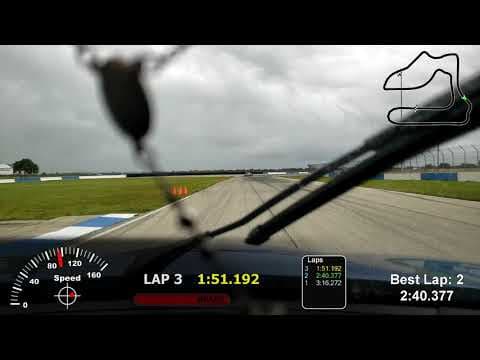
Why Promote Your HPDE.tv Channel Over a Raw YouTube Link: The Best of Both Worlds
Every stint played on your HPDE.tv channel uses the official YouTube IFrame Embed API, meaning 100% of views, watch hours, and AdSense revenue go directly to your YouTube channel while giving you a curated racing hub, a permanent CH # dial position, and side-by-side MultiView.
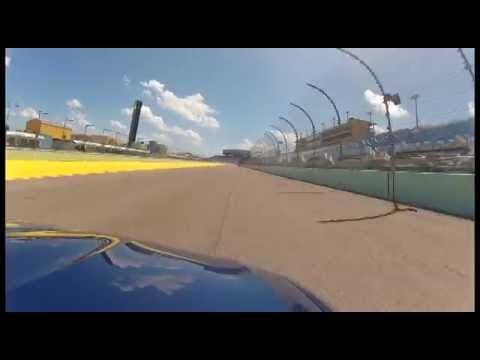
Creator Spotlights on /drive: How to Get Your Track Build, Home Circuit & PB Lap Featured
Any verified grassroots driver or channel owner from CH 101 to CH 1973 can claim their channel in seconds and submit their track car build, sector telemetry, and personal best stint to /drive.
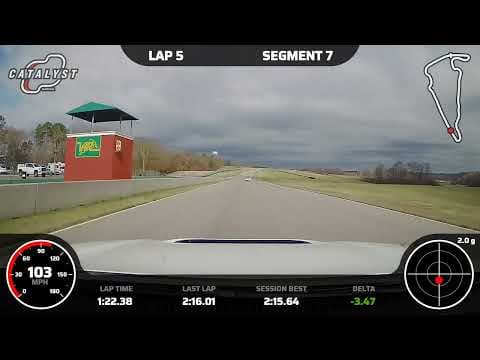
Garmin Catalyst vs. AiM Solo 2 DL vs. Cosworth PDR: Which Telemetry HUD Builds the Best Onboard Channel?
An exhaustive paddock teardown of real-time audio coaching, CAN-bus SmartyCam telemetry overlays, and factory high-definition PDR video logs for amateur track drivers.